


Woody Spicy Eau de Parfum: Notes, Character and How to Choose
Can two woody, spicy perfumes feel entirely different? Absolutely. A woody spicy eau de parfum can come across dry and crisp, warmly spiced, smoky, or unexpectedly fresh. The difference lies in how the woods and spices meet, not simply in the notes named on the label.
If fragrance descriptions leave you guessing, you’re not alone. Cedar, sandalwood, pepper, and cardamom may sound like a familiar list, but each can suggest a different impression. Dry woods may feel clean and grounded; creamy woods can soften a blend, while cool spices add lift and warm spices make it feel richer.
This guide shows you how woods and spices shape a fragrance, how a scent may develop from its first impression to its dry-down, and how to distinguish woody-spicy scents from aromatic or amber styles. You’ll also find practical ways to compare dry, warm, smoky, and fresh-leaning textures, then choose a scent that suits your taste and the settings where you plan to wear it.
Key Takeaways
- Learn how a woody spicy eau de parfum balances the character of woods and spices, and how the fragrance family differs from its concentration.
- Use top, heart, and base notes to understand how a scent may shift as it settles, not as a fixed timetable.
- Compare woody depth, aromatic freshness, and warmer, resinous character to find the scent texture that appeals to you.
- Choose by preferred texture, note descriptions, and intended setting, then test on skin and let the scent settle before deciding.
- Explore Rayhaan Lion, Rayhaan Elixir, and Rayhaan Crimson through the Rayhaan online store.
What Does Woody Spicy Eau de Parfum Smell Like?
A woody spicy scent balances earthy or dry woods with warm, lively spice. Depending on the blend, it may feel smooth or crisp, cosy or fresh, softly textured or smoky. The family describes a fragrance’s character; eau de parfum describes its concentration. One term points to the kind of scent impression, while the other identifies the fragrance format. Neither promises a single recipe or exactly the same smell on every wearer.
Think of the two sides as a conversation. Wood can give a fragrance a grounded impression, while spice adds brightness, warmth, or a gentle bite. Dry cedar with sharp pepper suggests something different from creamy sandalwood with softer, warmer spice. The Fragrance wheel can help you place woody and spicy families alongside related scent styles. To make a product description useful, translate its note names into textures you recognise.
A woody spicy fragrance pairs the grounded feel of wood with the lift or warmth of spice, but the balance can be dry, creamy, fresh, or smoky. Treat this as a guide, not a rule. Some compositions make the woods prominent; others let the spice lead.
Which woody notes shape the scent?
Start with texture. Sandalwood is often described as creamy and smooth, while cedar tends to suggest a drier, cleaner wood. Vetiver can bring an earthy, root-like quality, sometimes with a smoky edge. Patchouli is usually deeper and earthy, though the surrounding notes affect its overall impression. Bright companions may make it feel less dense; warm spices can make it seem richer.
These words describe impressions within a composition, not a promise that every perfume uses the same raw ingredients. In modern perfumery, a woody impression may come from natural materials, reconstructed materials, or a blend. When you read “woody,” ask what you want from it: dry and crisp, creamy and soft, or dark and earthy. That preference is more useful than choosing by a note name alone.
Which spices create warmth or brightness?
Black pepper often gives a sharper, drier impression, while cardamom can feel fresher and more aromatic. Cinnamon and nutmeg suggest a warmer, rounder character, but neither is required for a fragrance to be woody spicy. The surrounding notes shape the effect: bright spice can lift deep woods, while warm spice can make smooth wood feel cosier.
A listed note is a clue to an impression, not necessarily proof that the literal ingredient is present. Read the description as a sensory sketch. “Peppery” points towards a sharper edge; “spiced warmth” suggests a softer, more enveloping effect. If you prefer lightness, look for fresh or aromatic cues alongside woods. For more depth, earthy woods and warmer spice descriptions may appeal to you.
How Do Woody and Spicy Notes Develop in an Eau de Parfum?
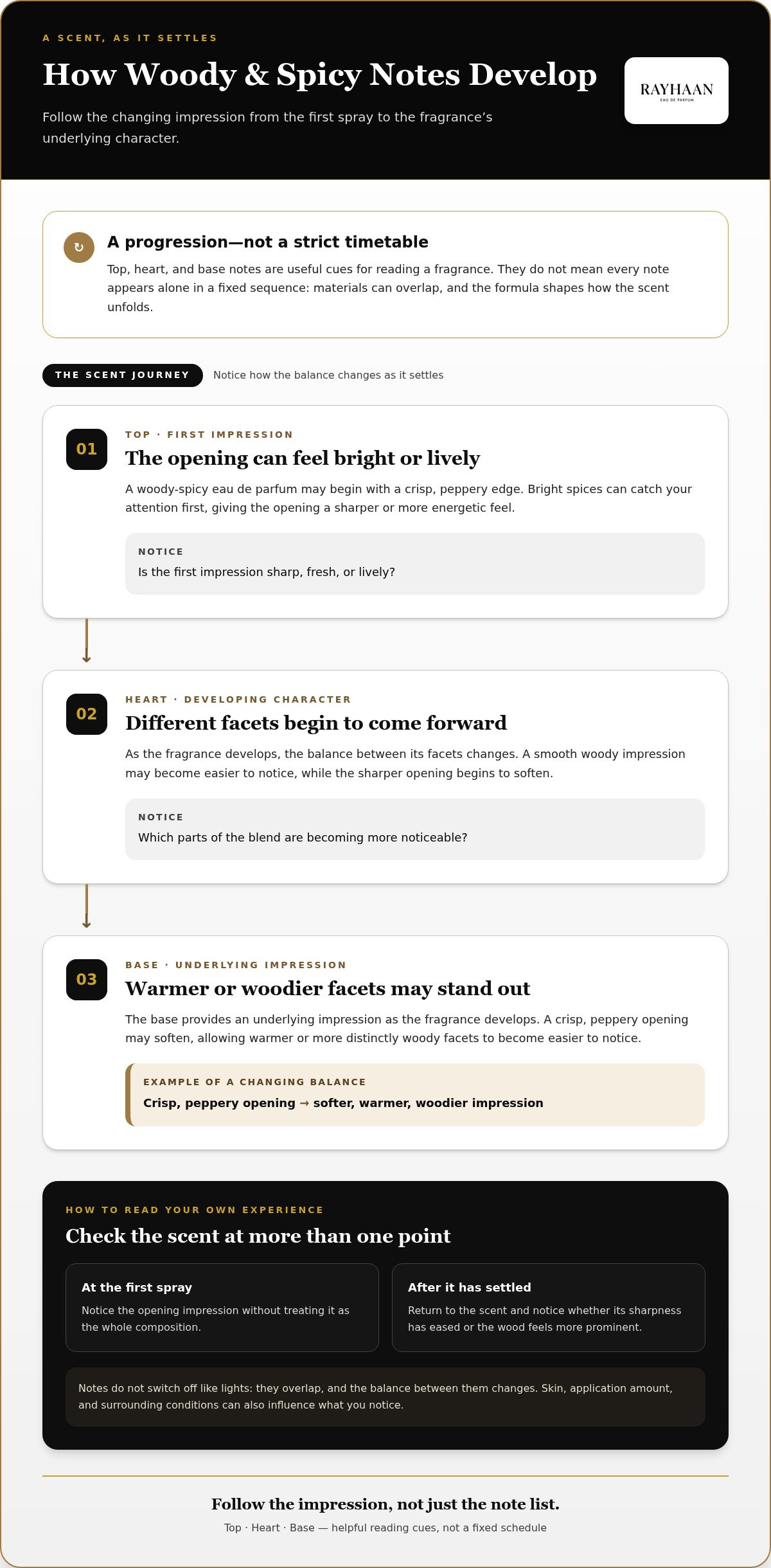
The first spray is only one part of the experience. A woody spicy eau de parfum can open with a bright, lively edge, then feel smoother, warmer, or more distinctly woody as it settles. Perfumers often describe this progression through top, heart, and base notes. Treat those stages as a way to read a scent, not a strict schedule: notes can overlap, and the formula shapes how the fragrance unfolds.
One fragrance can smell different after its first spray because its materials evaporate and interact, shifting the balance you notice. That change doesn’t mean the opening was misleading. It is part of how a blended fragrance can reveal different facets over time.
What do top, heart, and base notes mean?
Top notes describe the initial impression; heart notes describe the developing character; base notes provide a lasting foundation. These labels help explain a fragrance’s structure, but they don’t assign every ingredient to a fixed stage. A bright spice might catch your attention first, while a smoother woody impression becomes easier to notice as the scent settles. For more on this model, see Fragrance Notes Explained: The Complete Guide.
- Top: The first impression, which may feel bright or lively.
- Heart: The developing character, where different facets begin to come forward.
- Base: The underlying impression that remains as the fragrance develops.
These are reading cues, not a promise that each note will appear alone or in sequence. Some materials can be noticeable across multiple stages, while others blend into the overall effect. A wood described as a base note, for example, may still be noticeable earlier in the experience.
Why can the same fragrance feel different over time?
As a fragrance settles, more volatile materials evaporate and the remaining blend creates a different impression. A crisp, peppery opening may soften, allowing warmer or woodier facets to stand out. The notes don’t switch off like lights; they overlap, and the balance between them changes. That is why a quick sniff may not tell you how the full composition will feel.
Your perception also matters. Skin, application amount, and surrounding conditions can influence what you notice. Instead of judging only the first spray, check the scent at more than one point: notice the opening, then return to it after it has settled. The sharpness may have eased, or the wood may feel more prominent. Focus on the overall impression you enjoy, rather than whether you can identify every listed note.
For another way to explore how a fragrance’s character develops, browse Rayhaan eau de parfum fragrances and compare the overall impressions described for each scent.
Woody Spicy, Aromatic Spicy, or Oriental: How Do They Differ?
These labels point towards different scent impressions, not airtight categories. A woody-spicy perfume tends to emphasise dry or earthy depth; an aromatic-spicy style often feels brighter and more herbal; and a spicy fragrance described as “oriental” may suggest a warmer, richer, resinous character. A scent can share qualities across these profiles, and retailers may classify it differently.
| Profile | Broad emphasis | How it may feel |
|---|---|---|
| Woody spicy | Woods with lively or warm spice | Grounded, dry, smooth, or smoky |
| Aromatic spicy | Fresh herbs with spice | Brighter, greener, or more lifted |
| Spicy oriental | Spice with warm, resinous notes | Richer, sweeter, or more enveloping |
How does woody spicy differ from aromatic spicy?
The difference is often the supporting character. Aromatic freshness can suggest herbs and a clean, bright lift; woods tend to create a drier, more grounded foundation. Spice can appear in both, so the label alone won’t tell you which direction a scent takes. Notice what leads: herbal brightness or more prominent woody depth. For a closer look at the neighbouring profile, explore this aromatic spicy scent guide.
The profiles aren’t mutually exclusive. A fragrance may open with a fresh, aromatic impression and still settle into a woody character, or combine herbal notes with warm spice throughout. Think of the labels as signposts to the dominant effect, not boxes a perfume must fit into.
How should readers interpret oriental or resinous descriptions?
In fragrance writing, “oriental” has often been used to suggest a warm, rich, sometimes sweet or resinous impression. The term is increasingly replaced by labels such as amber or resinous, which describe the scent character more directly. These family names remain broad conventions, not exact formulas: a label doesn’t guarantee particular ingredients or a single style.
To choose between profiles, read past the category name. Look at the accompanying notes and ask what texture they suggest. Do they point to dry woods, herbal lift, or a warm, resinous feel? Consider which impression seems most prominent, rather than expecting every listed note to have equal weight. This makes a woody spicy eau de parfum easier to compare with neighbouring styles, even when product listings use different family labels.
A useful shortcut is to compare the overall mood: woody depth feels grounded, aromatic lift feels fresher, and resinous warmth feels richer. Your nose may experience a blend differently from its retailer’s classification. Use the label to narrow your search, then let the note descriptions and overall texture guide your preference.
How to Choose and Wear a Woody Spicy Eau de Parfum
A simple selection process makes fragrance descriptions easier to use. Start with the texture you enjoy, look for notes that support that impression, then consider where and when you plan to wear the scent. This helps you choose a woody spicy eau de parfum for your own taste instead of relying on a broad label or someone else’s idea of what suits you.
Which woody-spicy texture may suit your taste?
Let texture lead. Dry cedar or earthy vetiver may appeal if you like a crisp, grounded character. Creamy woods and warmer spices can feel softer and more enveloping. Smoky, earthy, or resinous facets add depth, but they’re options, not essential parts of every woody-spicy scent. Look for words that describe the feeling you want, then compare the notes that contribute to it.
Use this three-step check before choosing:
- Step 1: Identify your preferred texture. Decide whether you’re drawn to dry and crisp, smooth and creamy, fresh and lifted, or rich and smoky. If you’re unsure, start with the description that sounds most comfortable for everyday wear.
- Step 2: Review the notes. Look for clues that support that texture. Cedar and vetiver often suggest a drier or earthier impression; creamy woods and warmer spices point towards a softer feel. Treat notes as guidance, not a guaranteed result.
- Step 3: Consider the setting. Think about wearing the fragrance in a shared indoor space, on a relaxed day, or for an evening out. A lighter-feeling profile may suit close quarters or warmer conditions, while a richer impression may feel more at home in a cooler setting or when you want a more enveloping presence.
If possible, test the fragrance on skin rather than deciding from a description or paper strip alone. Apply a modest amount, give it time to settle, and notice whether the changing impression still appeals to you. Skin and application can affect what you perceive, so a scent that seems sharp at first may later feel smoother, warmer, or more balanced. Avoid testing several strong fragrances at once, since competing scents can make each one harder to judge.
How can you wear the scent with intention?
Start modestly and adjust to your comfort and setting. In an office, on public transport, or in close company, considerate application helps keep the fragrance personal rather than overwhelming. In a more open or evening setting, you may prefer a more noticeable presence, but there’s no universal spray count or performance guarantee. Choose an amount that feels appropriate to you and those around you.
For broader application guidance, this guide to wearing fragrance well offers useful principles. Ready to explore the Rayhaan range? Discover Rayhaan fragrances.
Explore Woody Spicy Eau de Parfum Through Rayhaan
Once you know which textures appeal to you, product information becomes a more useful starting point. Rayhaan Perfumes’ eau de parfum range includes Rayhaan Lion, Rayhaan Elixir, and Rayhaan Crimson. Compare the product information for each with the qualities you’re looking for. The aim isn’t to match a label at any cost, but to choose a scent that feels like a good fit for your taste.
When exploring a woody spicy eau de parfum, consider the balance you want: dry or smooth woods, fresh or warm spice, or a deeper, smokier impression. Use the scent information provided for each Rayhaan Perfumes fragrance to guide your comparison, without assuming that every scent in the range belongs to the same family.
What should you look for on a Rayhaan Perfumes product page?
Start with the product information and read it as a whole. Specific details can help you compare fragrances, while the broader description can give you a sense of the intended character. Then match what you read to your preferences. If you favour a crisp, grounded feel, look for wording that supports it; if you’re drawn to something softer or warmer, compare the descriptions for those cues.
- Read the full description. Look beyond a single note or family label to understand the intended character.
- Compare the texture. Consider whether the product information matches the woods, spice, and balance you enjoy.
- Keep conclusions grounded. Use the information provided to compare scent impressions, rather than assuming performance, ingredients, or suitable occasions.
This keeps your comparison clear and fair. Two descriptions may use different language for a similar impression, while a shared note doesn’t mean two fragrances will smell alike. Focus on the overall character described, and use your own preferred texture as the reference point.
How can Rayhaan Crimson fit into your exploration?
Rayhaan Crimson is one of the fragrances in the Rayhaan Perfumes eau de parfum range. Use its product information as a starting point, then consider how the scent description aligns with the character you’re seeking: dry or smooth woods, a fresh or warm edge, or a softer or deeper impression. Let the information guide your expectations without adding assumptions about how it wears or what it contains.
You can use the same approach to compare Rayhaan Crimson with Rayhaan Lion and Rayhaan Elixir. Explore Rayhaan Perfumes fragrances and choose a scent that speaks to your taste.
Choose a Scent That Feels Like You
Your next fragrance doesn’t need to fit a perfect label. Let your own response guide you: the woody spicy eau de parfum you return to is the one whose character feels natural in your day and distinctly yours. Notice which descriptions draw you in, then use that preference to explore scents at your own pace.
Rayhaan Lion, Rayhaan Elixir, and Rayhaan Crimson are available through the Rayhaan online store. Compare their product information and see which one interests you. There’s no need to rush the choice; a considered first step can make fragrance browsing feel more personal and rewarding.
Explore and shop Rayhaan fragrances to find a scent that feels right for you.
Frequently Asked Questions
Which notes are commonly found in woody spicy fragrances?
Common references include cedar, sandalwood, vetiver, and patchouli alongside spices such as pepper, cardamom, cinnamon, or nutmeg. Some compositions also use oud for a resinous, complex woody impression, or ginger for a sharper, lively accent. These are examples, not a checklist. A fragrance can belong to the family without containing every familiar note, so read the full description to understand its intended character.
Is woody spicy eau de parfum the same as oriental fragrance?
No. The terms can describe related impressions, but they aren’t interchangeable. Woody spicy usually points to a prominent woody character paired with spice; “oriental” has traditionally suggested a warmer, richer, or resinous style. In current fragrance language, amber or resinous is often preferred to “oriental.” Labels still vary between retailers, so compare the notes and overall description rather than relying on the family name alone.
Can a woody spicy fragrance smell fresh as well as warm?
Yes. Freshness can come through in a bright, aromatic, or cool-spiced impression, while woods give the composition depth. A description that mentions crisp facets alongside woody notes may indicate a more lifted character than one focused on warmth, smoke, or resin. If you want freshness, look for those cues across the whole description, not just one note, and consider how the scent changes after application.
Why does a woody spicy perfume smell different on my skin?
Your skin can change how you perceive a fragrance, so a scent may seem sharper or softer on you than it does on someone else or on a paper strip. Application amount, other scented products, and your surroundings can also affect what stands out. For a clearer impression, test on clean skin and avoid applying another fragrance nearby. Your own reaction is the most useful guide to whether the scent feels comfortable.
Can woody spicy eau de parfum be worn in warm weather?
Yes, if the scent’s character and your application feel comfortable in the heat. For warmer days, you might prefer a fresher, less heavy impression and begin with a modest application. Try it in the conditions where you expect to wear it, then notice whether it still feels pleasant after settling. A richer, smokier style may suit your taste too, but personal comfort and the setting should guide your choice.
How can I test a woody spicy fragrance before choosing one?
Apply a small amount to your skin, then give yourself time to experience more than the first impression. Avoid testing several scents on the same area, since they can blur together. If comparing options, use separate skin areas and make a quick note of what you notice at first and after settling. This simple comparison helps reveal which fragrance feels most natural to you beyond its written description.


